

A visitor to Kedleston Hall offers a Nepalese perspective on the National Trust's interpretation of Curzon and Britain's colonial past
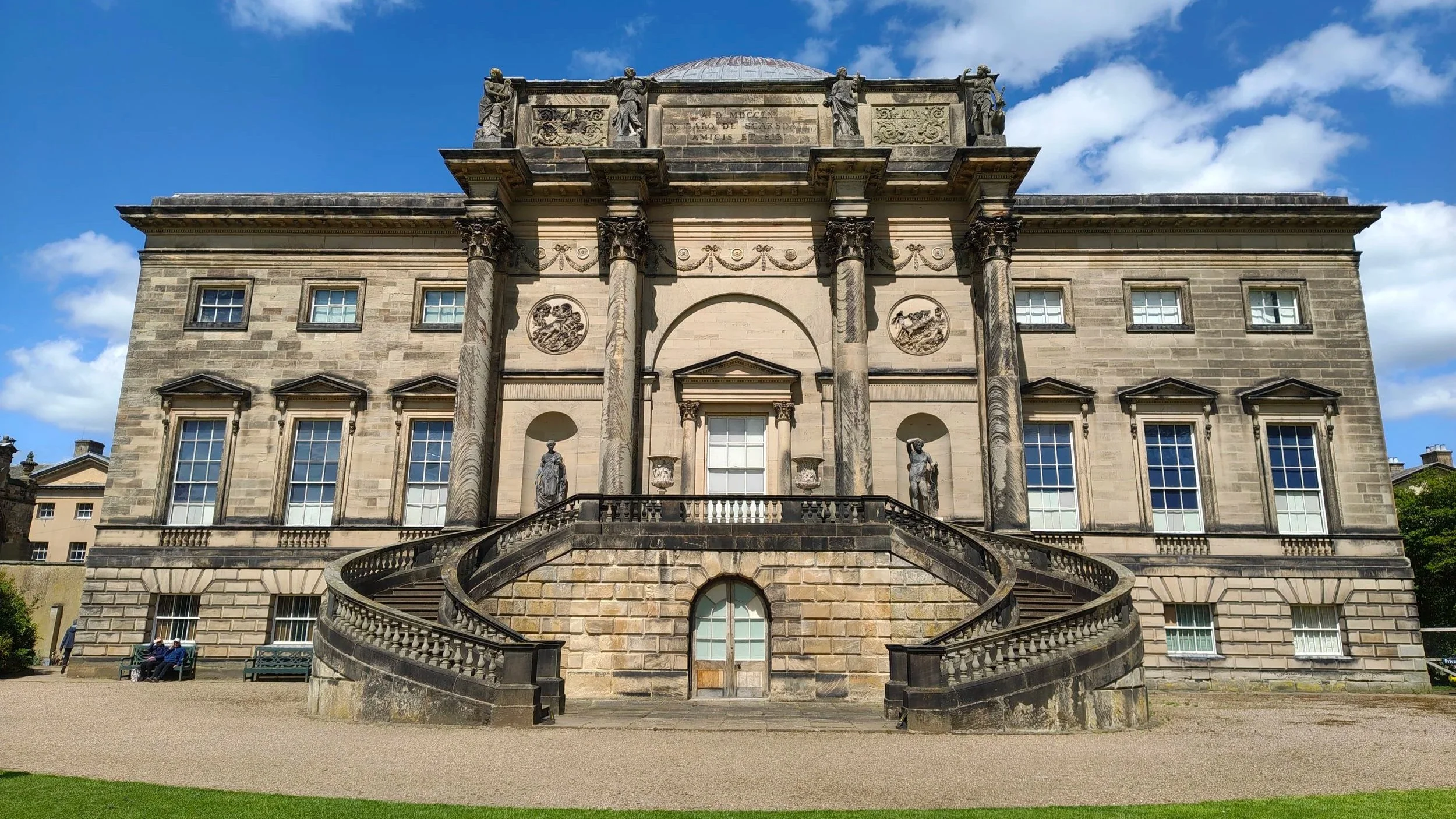
Kedleston Hall is a superb Neoclassical house in Derbyshire built by Robert Adam in the 1760s
Built in the 1760s, Kedleston Hall is one of Britain’s most impressive buildings. The house is a spectacle in itself, topped with the astonishing scenery surrounding it, including an estate of over 800 acres and blooming gardens. It is without doubt the most spectacular piece of architecture I have ever seen.
Robert Adam designed this Palladian mansion in Derbyshire for the Curzon family in the 18th century, and it is now a National Trust property. The sweeping driveway towards the house encapsulates the quintessential English feel that represents the country to many, and most would feel a sense of peace as they make their way through the large double doors.
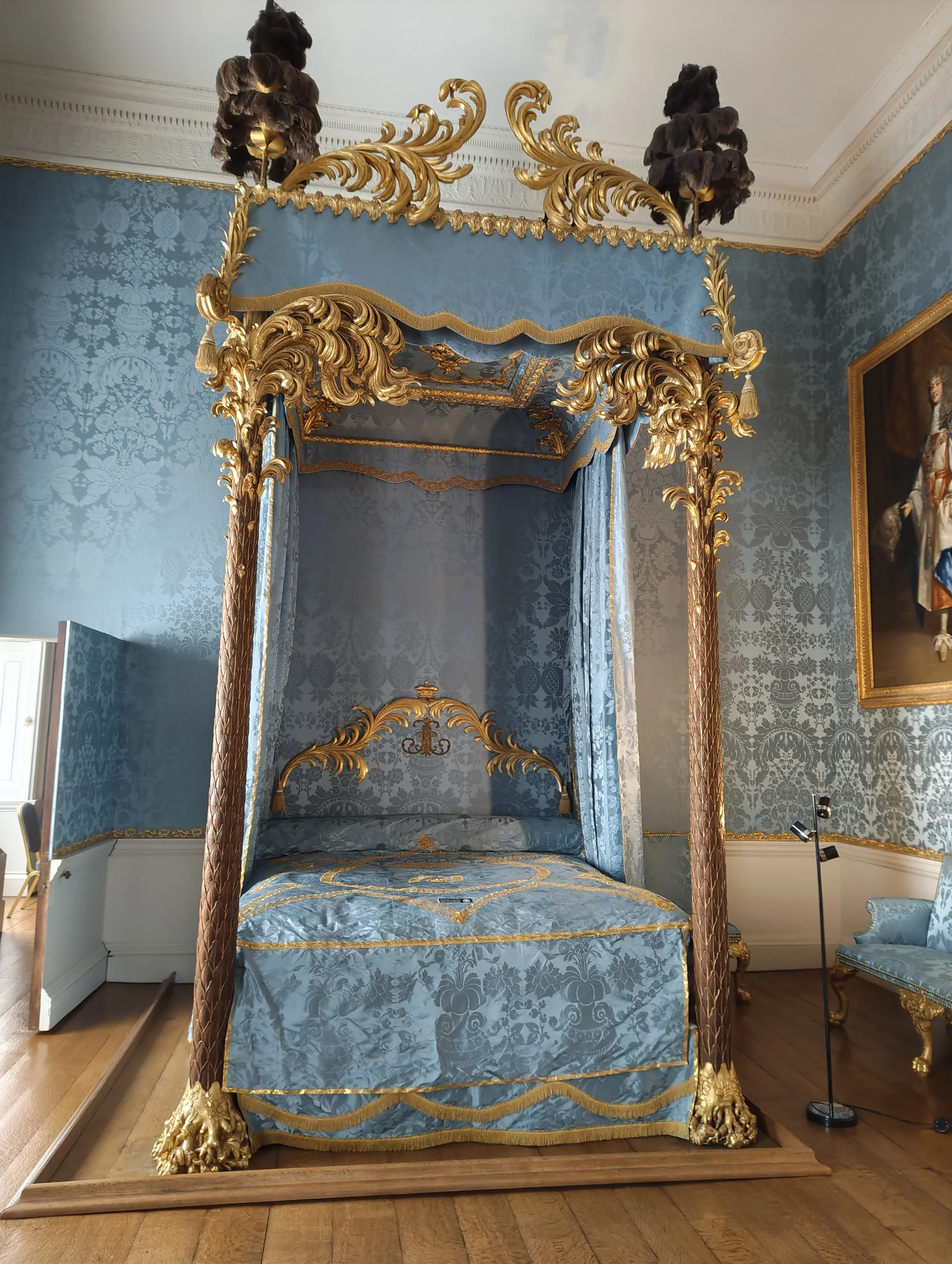
The impressive State Bedroom at Kedleston Hall
Upstairs is an absolutely sensational state bedroom. The room reflects the classical style seen throughout Kedleston Hall. There is intricate plasterwork, classical decoration and a marble fireplace, all designed as part of Robert Adam’s wider Neoclassical scheme for the house. The bed itself is particularly striking, with carved posts designed to look like palm trees, showing the level of detail that went into even the furniture.
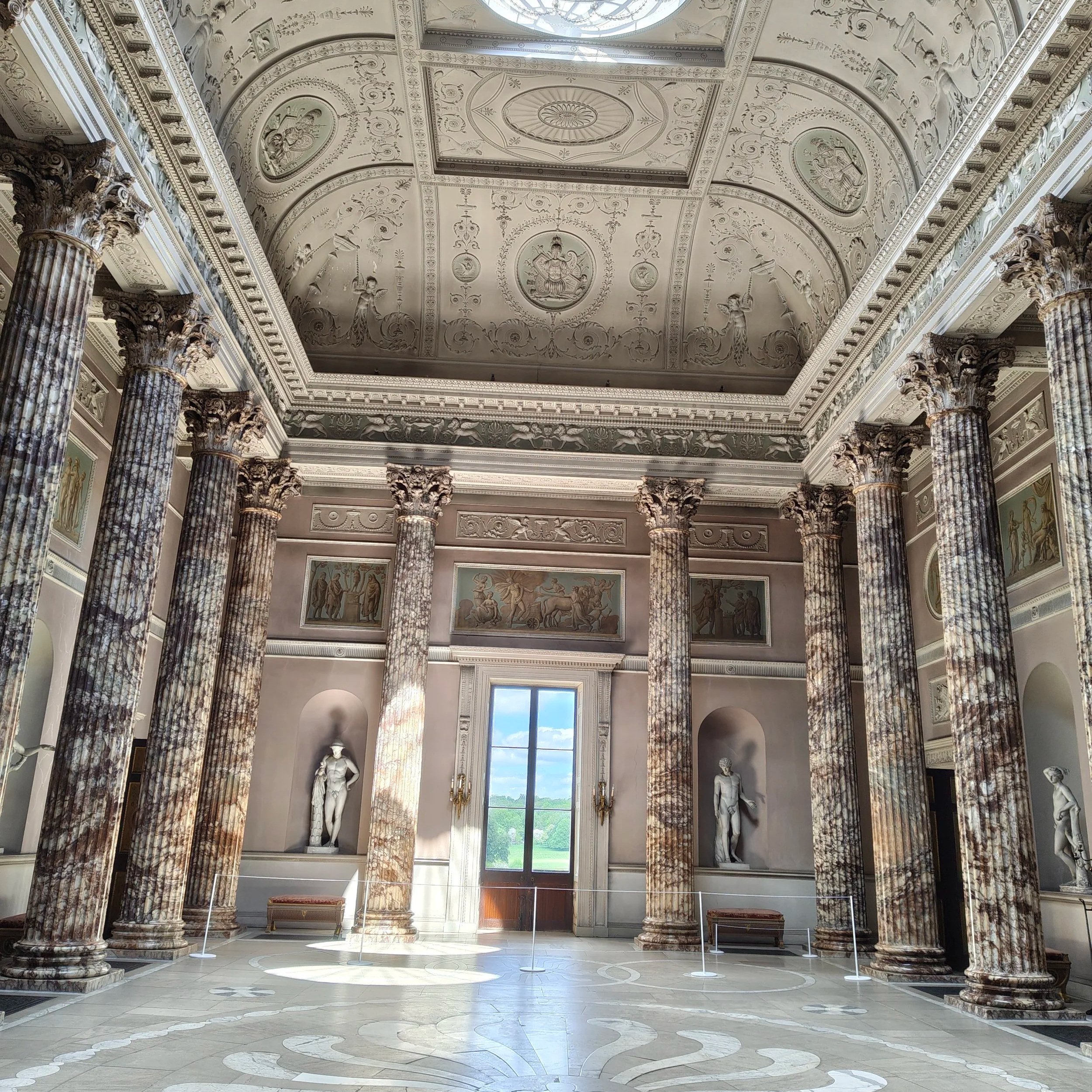
The Marble Hall
The most impressive room in Kedleston. Though, is the Marble Hall. It is huge, measuring around 67 feet long, 37 feet wide and 40 feet high. The room is lined with 20 Corinthian columns made from pink Nottinghamshire alabaster, with classical statues set into the walls. The ceiling is heavily decorated with plasterwork, while the floor combines Hopton Wood stone with Italian marble. The design was strongly influenced by ancient Roman buildings, which was central to Robert Adam’s vision for Kedleston.
On the ground floor is the Eastern Museum, filled with over 1000 objects which were collected from Asia, such as shrines, Hindu and Buddhist objects, ceremonial objects given to Curzon and many different souvenirs acquired during his travels.
As I made my way into the museum I noticed the amount of artifacts that Curzon had collected from his time in Tibet and Nepal, which is where much of my ancestral background is from. Lots of cultural artefacts were displayed for the gaze of National Trust members, but it particularly intrigued me due to it being part of my own heritage. Different weapons and many religious objects were there, highlighting the culture of my nation.
The building was obviously made to be a masterpiece to inspire and push the limitations of architectural beauty. However, after I observed these artefacts for a substantial amount of time, weaving my way through the different rooms, I began to feel an overriding sense of confusion and disagreement as I moved through the grand building. When I walked through the doors I expected fascination would be the overriding emotion. However, as I spent more time in the house I noticed subtle captions which were leading people to a feeling of guilt and discomfort. Rather than simply providing information about the history of the objects and the people connected to them, some of the interpretations appeared to encourage visitors to view the house and its history through a particular moral lens. This began to affect how I experienced the building, as I found myself thinking less about its architecture and historical significance and more about the message I was being encouraged to take from it. The moral lens being applied here is the colonistation of the South Asian countries. Whilst this is a fact which should be stated, it needs to be done with a level of objectivity, not with the National Trust’s own particular slanted interpretation. The building’s original purpose was to demonstrate the wealth, ambition and artistic achievements of the people who designed and occupied it, and visitors should still be able to appreciate this historical and architectural significance while being given an honest account of the circumstances in which that wealth was accumulated, which, in this case, is from agricultural estates in Derbyshire. By placing such a strong emphasis on modern interpretations of the past, there is a danger that the building itself becomes secondary to the narrative surrounding it, and that visitors leave focussing more on what they are supposed to feel about the history than on understanding the history itsel
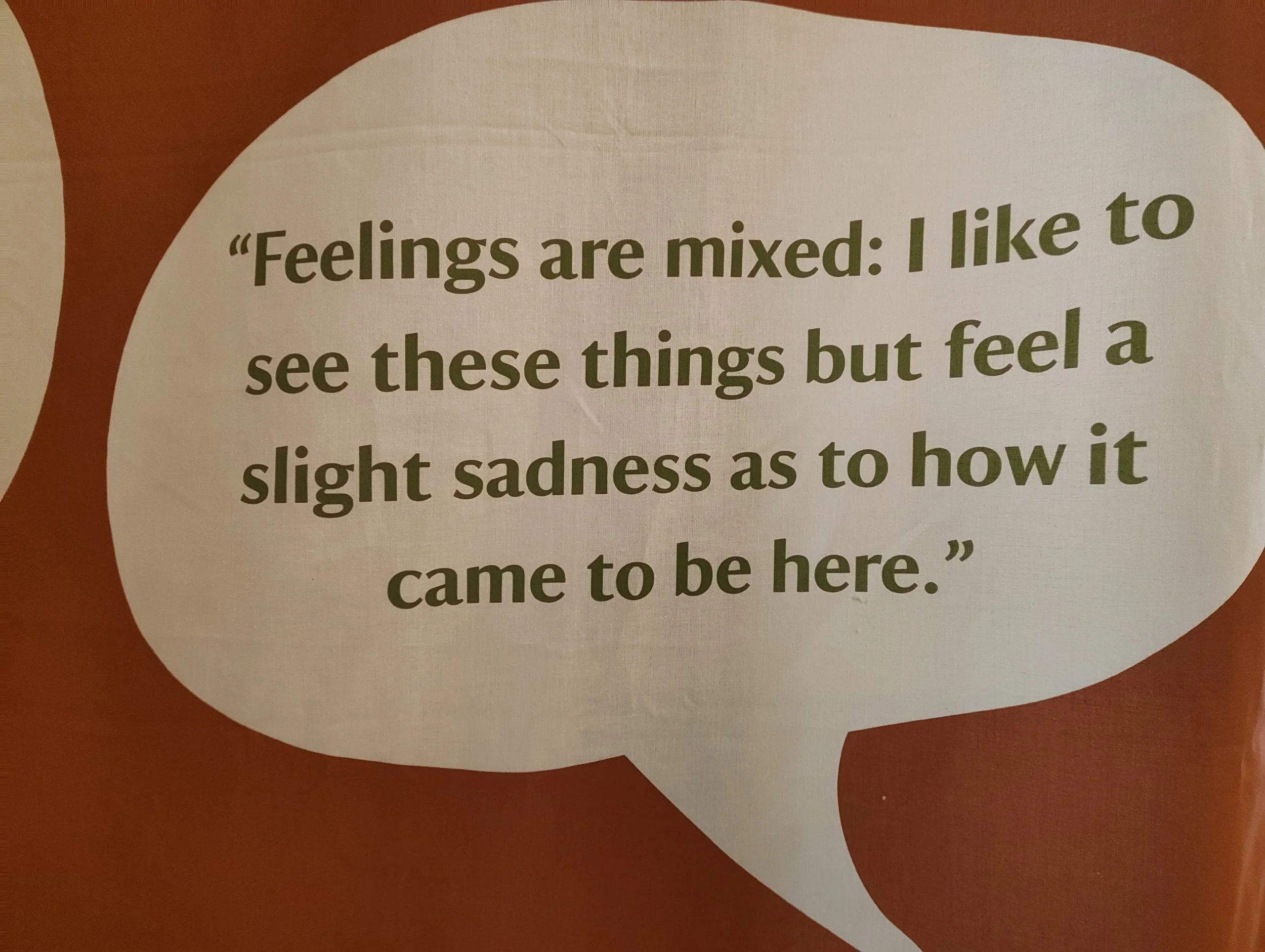
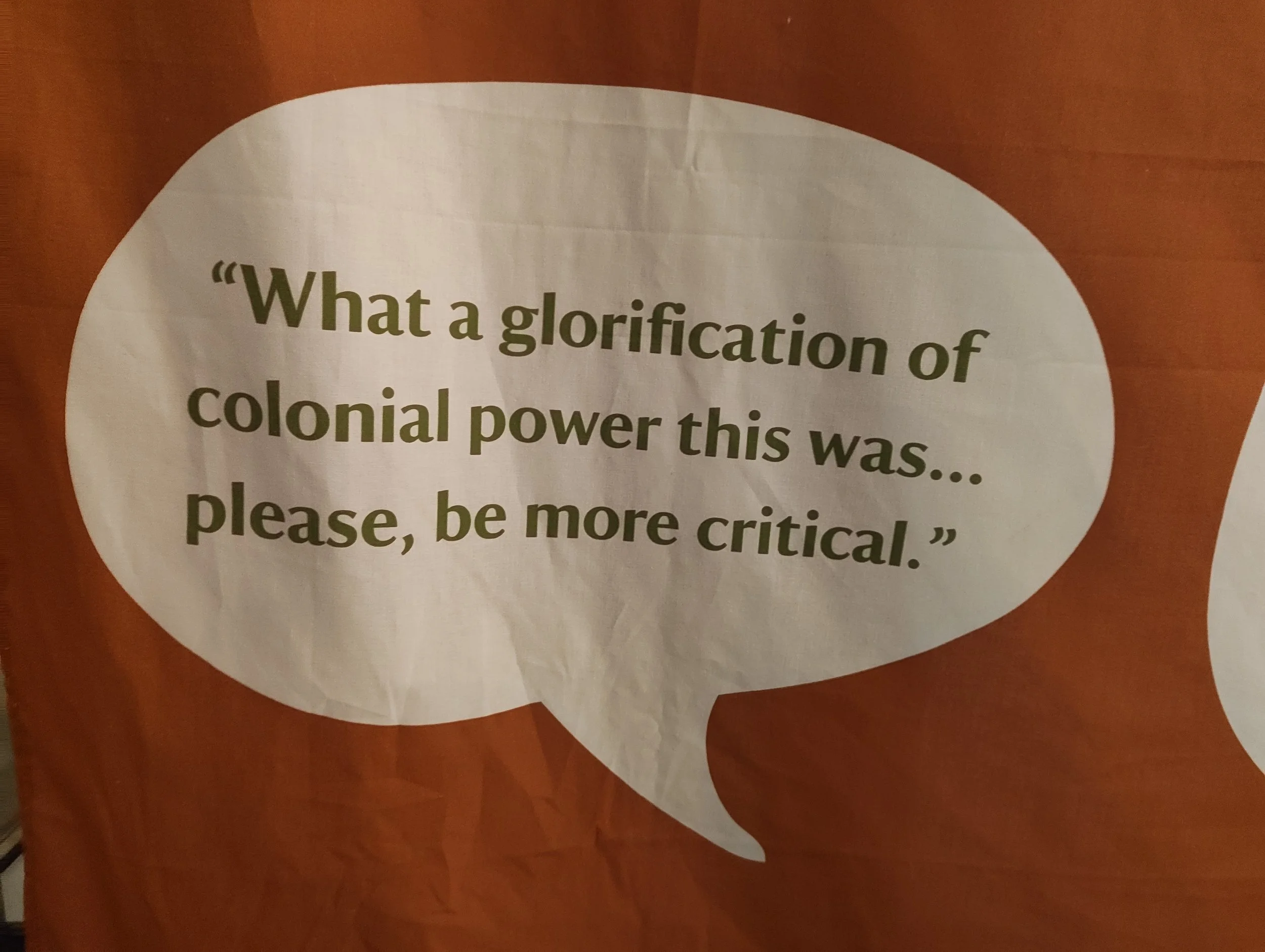
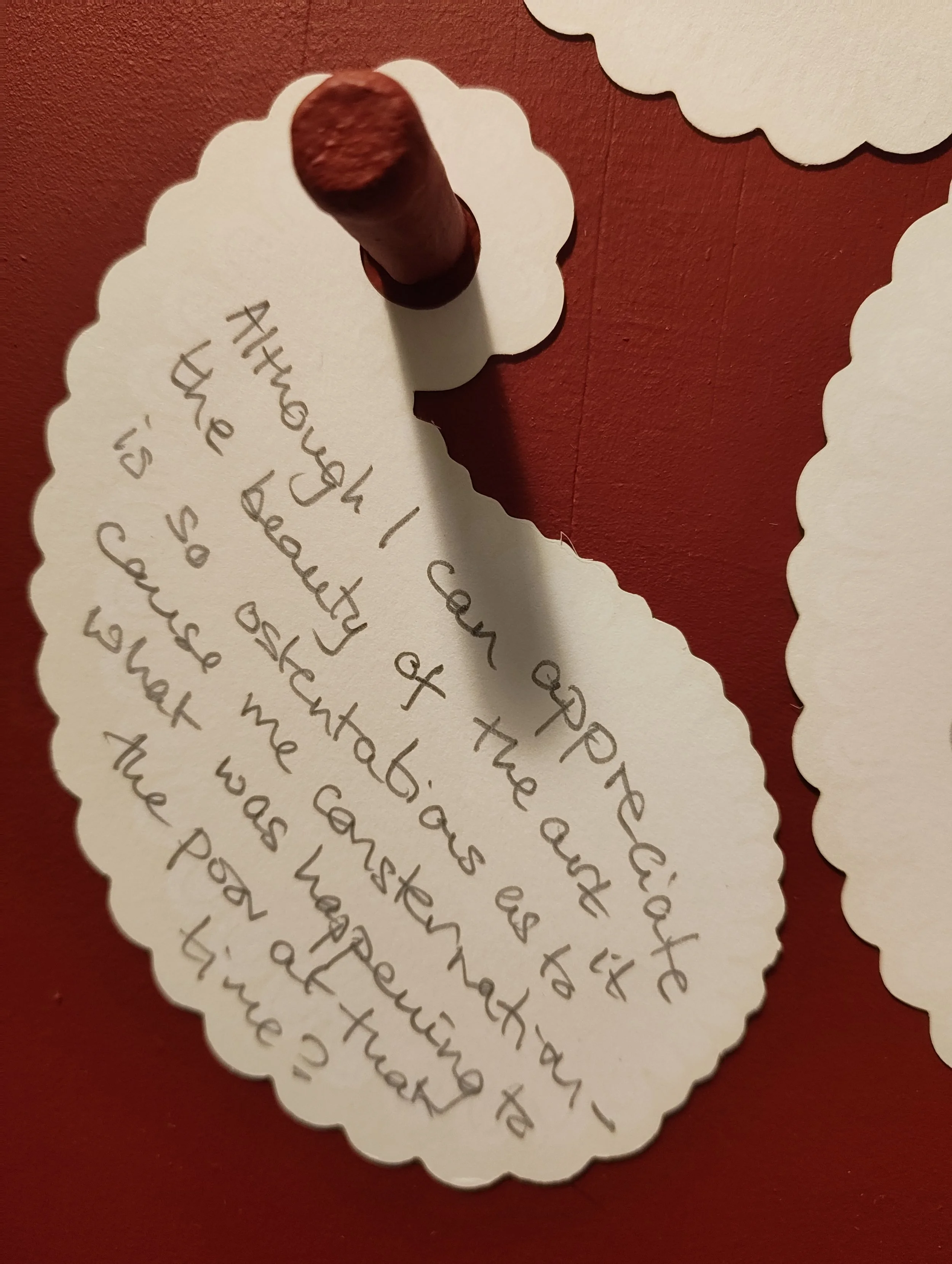
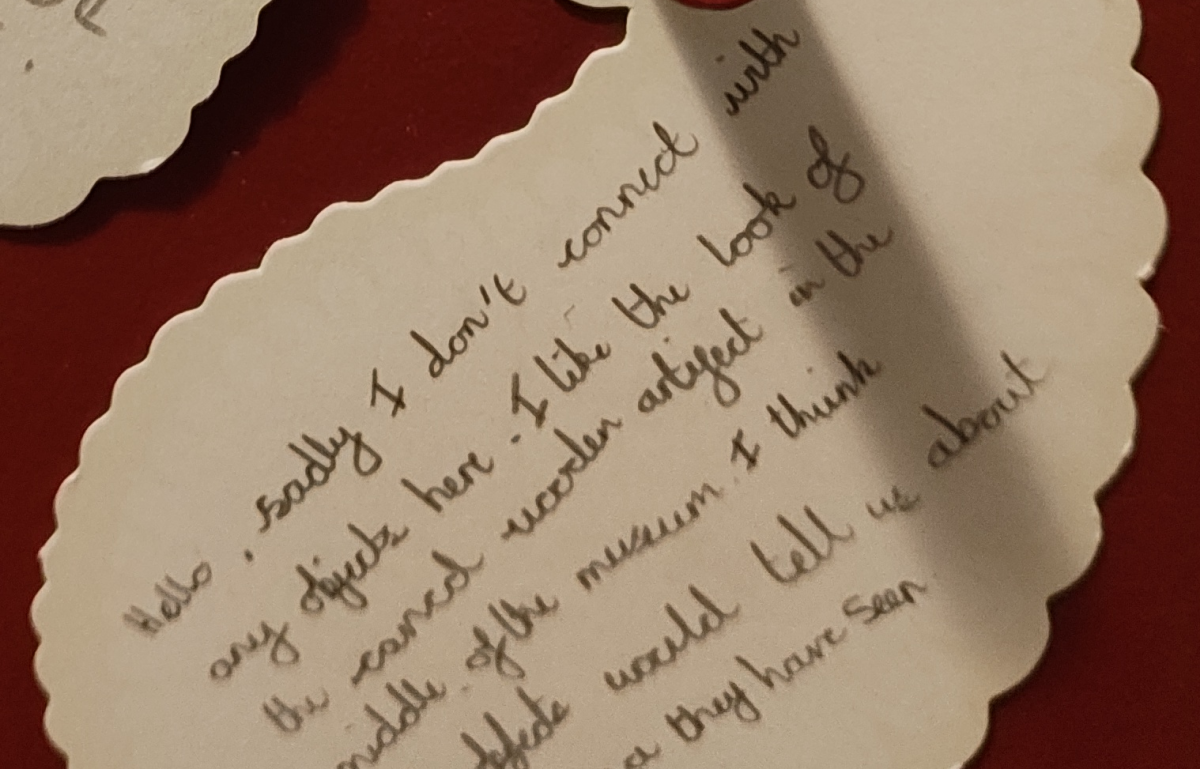
For example, when describing the hunting of a stag in the Himalayas, the accompanying caption concludes with the question, ‘How does this make you feel?’. This type of language seems unnecessary in a room intended to showcase fascinating architecture and historically significant objects. There is nothing inherently wrong with encouraging reflection, but when this becomes a recurring feature of an exhibition, which it was, it raises the question of whether the visitor is being educated about history or guided towards a particular interpretation of it. While the Himalayas extend into Nepal (my heritage), and the history surrounding British activity in the region is undoubtedly worthy of discussion, there is a distinction between telling what happened and encouraging visitors to feel personally responsible for it. People living today should not be made to feel guilty for actions carried out by individuals more than a century ago. In this instance, the National Trust appears to risk shifting historical responsibility away from those who directly participated in these events and towards visitors who had no involvement in them. History should provoke curiosity, discussion and understanding, but it should not assume inherited guilt. Furthermore, there are many speech bubbles around the hall, with people expressing their disgust at how the items had been ‘stolen’ or ‘retrieved’ from countries such as mine. Whilst I may not approve of how some items had arrived in Britain, there is a danger that the National Trust is influencing visitors towards a particular emotional response rather than allowing them to engage independently with the history. This is where I believe the National Trust could improve its approach. The emotion that the National Trust was trying to push is completely unnecessary, and from a Nepalese perspective, it comes across as rather patronising, almost as if someone is trying to speak for us, and make up our minds for us.
This seems to be part of a wider approach at Kedleston. The National Trust itself says that the Asian collection is being presented ‘from the perspective of the coloniser’. I found this quite telling, because it shows that the Trust has consciously chosen a particular lens through which these objects should be viewed. I have no problem with visitors being made aware of the colonial background, but I do question why this has to be the lens through which so much of the collection is understood, especially when the Trust itself admits that there are still many things it does not know about the collection, including how and where some of the objects were acquired. If the facts are not always clear, the display should reflect that. Instead, I felt the curators designing the exhibition were more confident about how the objects should make visitors feel than about their own grasp of the facts.
All told, I walked into Kedleston to observe some of the artefacts from my Asian heritage, and received an almost apology-like vibe in the building. I received emotional responses instead of information.
This is where my own Nepalese heritage becomes relevant. I found the approach particularly strange because I was visiting Kedleston precisely because I wanted to see objects connected to the history and culture of the region my heritage comes from. I did not feel the need for someone else to tell me how I should feel about those objects or to speak on behalf of Nepalese people. I wanted to know where the objects came from, how they came to Kedleston and what their history was. I may have reached a critical view of Britain's role in acquiring them, but I would rather reach that conclusion myself
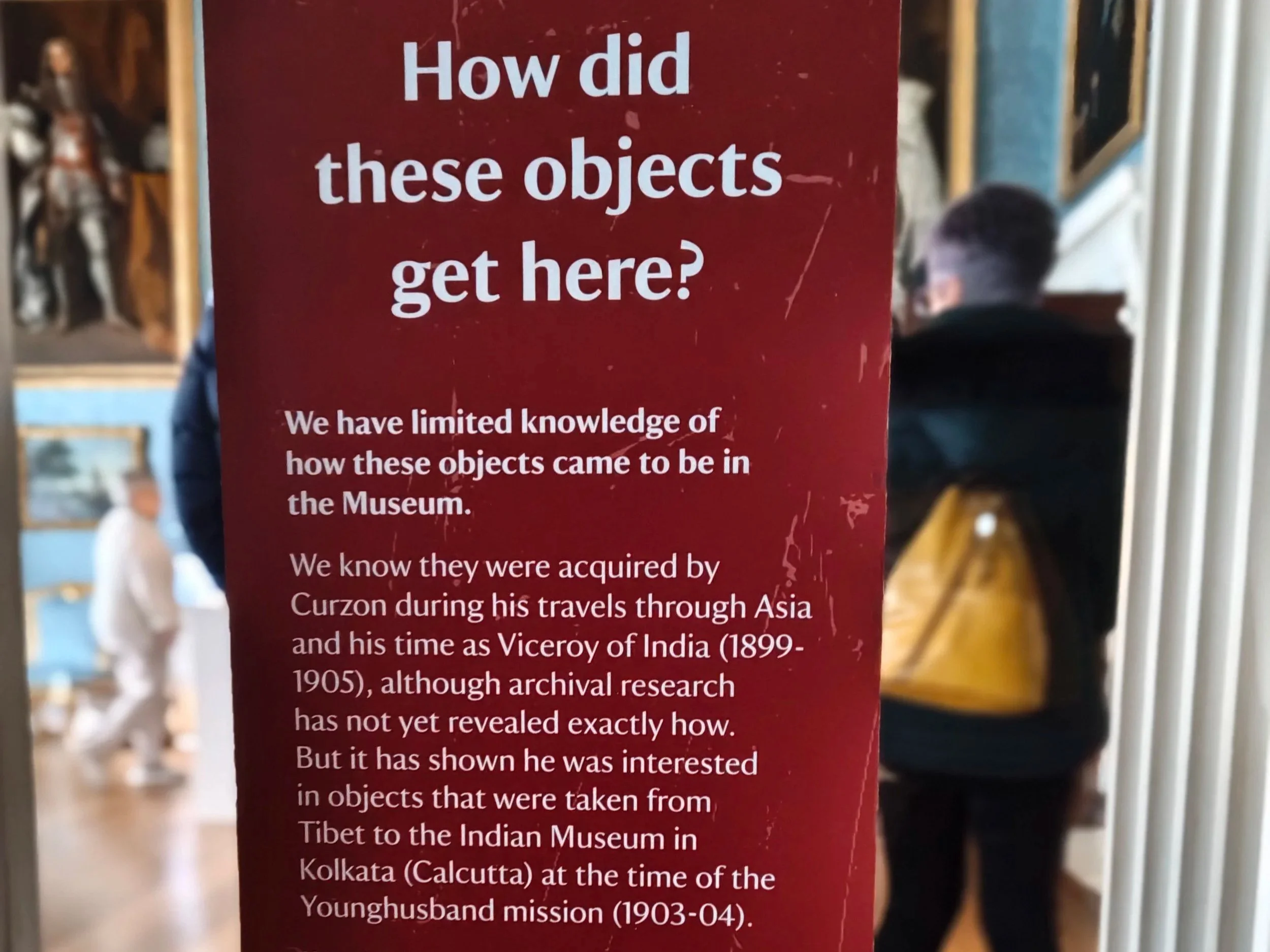
The presentation of the Eastern Museum offers more speculation than facts
The National Trust is right to offer information about the less appealing aspects of Britain's imperial history, but there is a difference between being honest about history and prescribing a reaction to it. The Trust should provide the evidence, acknowledge where the history is uncertain and present different perspectives. Visitors, including those of Asian heritage like myself, should then be trusted to make up their own minds.
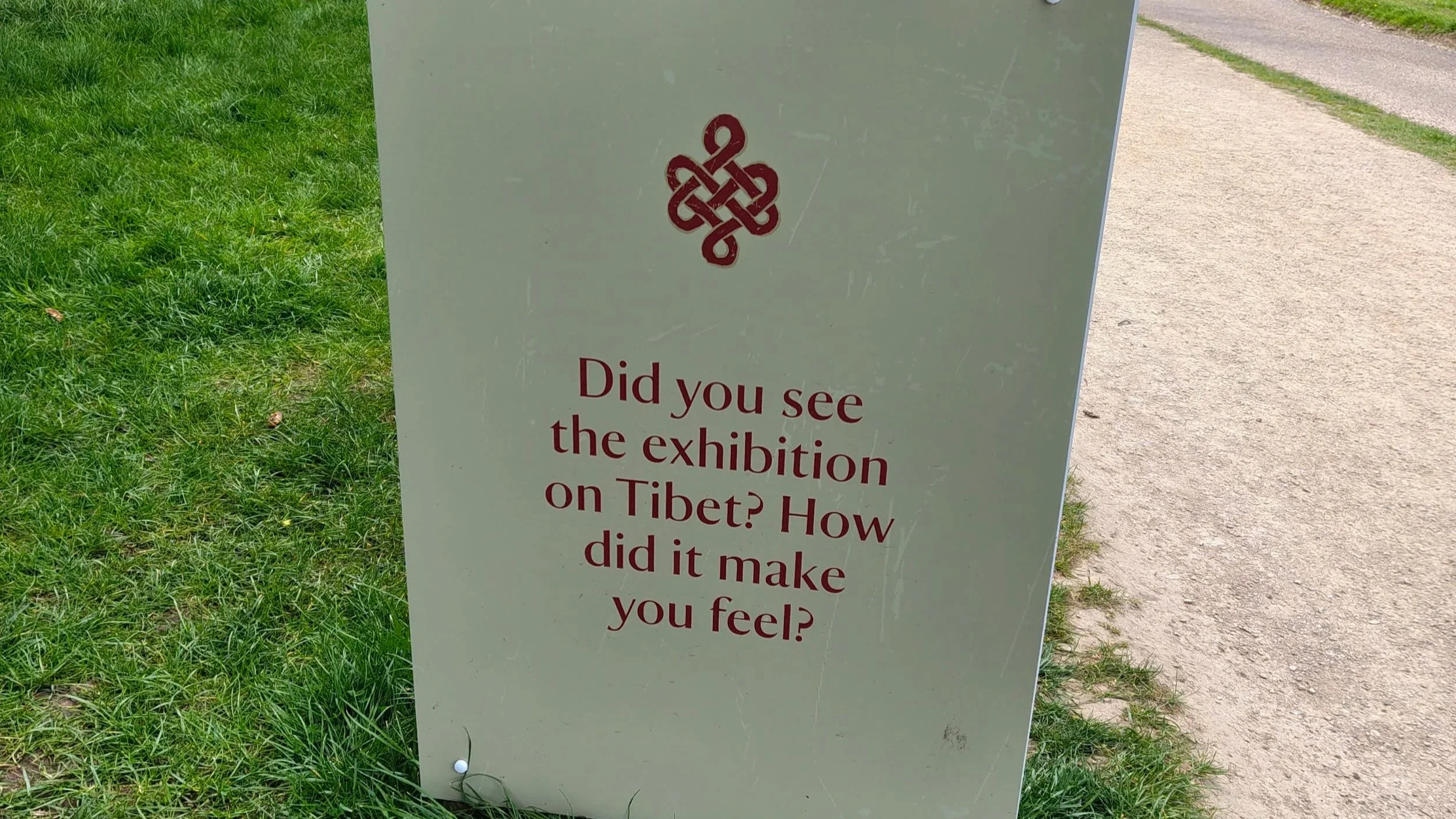
‘Emotional responses instead of information’
Another point I would like to touch on is the lack of information on Lord Curzon himself. I walked through the halls and rooms expecting a bombardment of information of his past careers, relationships which I would have found extremely intriguing, given he was the owner of the house. Instead most of the information was centered on how he ‘looted’ many of the artefacts and how he was an imperialist. Given Curzon was a colonizer, he was undoubtedly an imperialist, but imperialism wasn’t the complete extent of his character. For context, George Nathaniel Curzon was born at Kedleston Hall in 1859. He was educated at Eton and Oxford before entering politics in 1886 as the Conservative MP for Southport. From an early stage in his career, Curzon became particularly interested in foreign affairs and Asia. He travelled widely through Russia, Central Asia, Persia, Afghanistan and parts of East and Southeast Asia, later writing several books about his travels and experiences.
His interest in Asia became a major part of his political career. He served as Under-Secretary of State for India and later as Under-Secretary for Foreign Affairs. In 1899, at the age of 39, he became Viceroy of India, a position he held until 1905. His time in India was controversial, particularly because of his decision to partition Bengal, but he also took a strong interest in the preservation of India's historic buildings and monuments.
After leaving India, Curzon remained heavily involved in British politics. He entered the House of Lords and eventually became Foreign Secretary in 1919, a position he held until 1924. Throughout his life he retained his interest in Asia, collecting art and objects and developing the collections at Kedleston Hall.
However, despite being in his own home, this information was either unavailable or very well hidden. I was only able to find out much of it by speaking to a room guide. This surprised me because I would have thought that understanding Curzon himself would be an important part of understanding the house and the collection. Instead, I felt that I was being given plenty of information about what Curzon represented, but considerably less about who he actually was. Surely if the National Trust wants visitors to understand the history of Kedleston, it should give them enough information about the man who lived there to make up their own minds about him.
Not only did it feel like there was information which the National Trust was gatekeeping, but it also felt like there was some intention behind what was and wasn't being shown. By emphasising the imperialist side of Curzon's character so heavily, while making it much harder to learn about other parts of his life, I was left with the impression that the less appealing parts of his character were being deliberately pushed to the front. I am not saying that his imperialism should be ignored, because it is an important part of his history, but surely the point of a historic house is to give people the information and let them make up their own minds. If Curzon was such an important figure in British and Asian history, then I want to know about all of him: his career, his travels, his interest in Asia, his relationships, his achievements and his controversies. I do not want to be given a version of him which has already been decided for me.
This does not appear to be something I was imagining either. One example of the more positive work Curzon the Trust does not highlight is his work in preserving historic buildings and monuments in India. If the National Trust is going to ask visitors to judge Curzon, then surely they should first be given the fullest picture possible.
This same lack of nuance can also be seen in the way the collection itself is described. Also, the use of the phrase ‘spoils of empire’ when referring to Curzon’s Asian collection is interesting because the objects were not all acquired in the same way. Some were bought, some were given to Curzon as gifts and others were commissioned. This does not mean that every object was acquired fairly, and I am certainly not suggesting that questions around ownership should be ignored. However, it does show how important it is to look at each object individually rather than putting the whole collection under one label. Calling them the ‘spoils of empire’ immediately gives the visitor a particular impression before they have even found out how the objects came to be at Kedleston. Surely it would be better to explain what is known about each object and, where the information is uncertain, simply say that it is uncertain. That way, the visitor can make their own judgement rather than being given one from the beginning.
This is particularly frustrating because I had a genuine interest in Curzon. I was standing in the house where he was born and lived, looking at artefacts connected to a part of my own Nepalese heritage, and I wanted to understand why he had such a fascination with Asia in the first place. Instead, I had to speak to a guide to find out more about his actual life. Interesting and well-informed though they are, I don't think the room guides should be visitors’ only means to get a fuller picture of the person whose home they are standing in.
Ultimately, I feel that Curzon is not portrayed as accurately as he should be. The Trust has a responsibility to present the history of the house honestly and fully, rather than allowing one part of Curzon’s character to define the whole person. I am not asking for his imperialism to be ignored, but I do think visitors should be given a more rounded picture of the man behind the house and collection. By heavily emphasising his colonial past while giving much less attention to the rest of his life, it feels as though a judgement has already been made for the visitor. This is what I found most disappointing. I wanted to leave Kedleston understanding Curzon better, even if I disagreed with many of his views, but instead I felt that I had been told what he represented rather than allowed to decide for myself who he was.
This can be dangerous because once a particular interpretation is presented as the dominant one, it becomes easy for visitors to accept it without questioning it. History is rarely completely good or bad, and reducing someone like Curzon to one aspect of his character risks turning history into a judgement rather than an opportunity to understand the past. The National Trust has the influence to shape how thousands of people understand these figures, which makes it even more important that it presents the evidence fairly and does not effectively decide the visitor’s opinion for them.
And then there is the danger that, in trying to represent the experiences of Asian people, the Trust presumes to speak for them instead. As someone with Nepalese heritage, I found this irritating. I do not need an institution to tell me how I should feel about Curzon, colonialism or the objects he collected from Nepal and Tibet. I can recognise the harm caused by British imperialism while still wanting to understand the culture, history and people behind these objects. The assumption that there is one correct Asian response to this history is a form of oversimplification. There is a difference between giving people a voice and deciding what that voice should say. The Trust should open up these histories to different perspectives, not close them down by telling visitors which perspective they should adopt.