

Repairs to tenanted houses take years
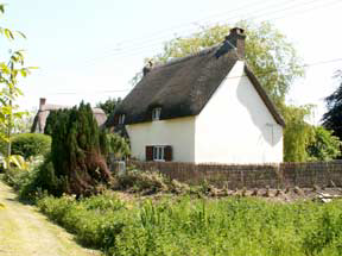
Historic cottages are often near-impossible to bring up to the government’s rental standards
A former building manager for the National Trust has told the Telegraph that historic tenanted properties are deteriorating as repairs are not being done, and stricter energy standards are likely to make the situation worse. The Telegraph reports:
Those living in Shapwick and Pamphill say that the charity is already struggling to find the funds to maintain its rented properties under the existing regulations.
Frank Miller knows as much as anyone about the National Trust’s cob cottages. He was head-hunted by the charity to work as building manager on the Kingston Lacy estate, and stayed in the role for 22 years before he was made redundant in 2004.
“My heart is here – I moved here from Sussex for the job,” he says. “I know every cottage, every waterway, every stopcock. People still ring me up now when they have a problem.”
Now a parish councillor, the 71-year-old still lives as a tenant of the Trust in the thatched cottage he moved into when he first came to Shapwick.
He has watched the village’s slow decline in the past two decades with dismay, with repairs going uncompleted and cottages left empty, including his neighbour’s, which has been without tenants since December. The Trust says refurbishment works on the property will start this month, with the aim of finding a new tenant in early summer.
“I’ve got nothing against the Trust, I’ve got no axe to grind,” he says. “But I do have an axe to grind when they don’t do their repairs. We never used to have this problem. It’s so sad when I drive around and I see my estate as it was going to wrack and ruin.”
Martyn Underhill and his wife Debbie have faced their own struggles with the slow pace of repairs. They moved to Pamphill in 2014, and one of the attractions of the village was the security that came with signing a long-term lease with the National Trust. The couple’s rent is £1,300 a month.
“Communities like this are few and far between,” says Martyn, who chairs the parish council. “Because it’s so idyllic, you put up with the difficulties but you do get frustrated by it. We had a leak coming down our chimney that went on for six years before it was fixed.”
A common complaint among tenants is that the money raised from rent on the estate is not ring-fenced for repairs, but instead disappears into a central funding pot.
“I think they’re just focusing on the big posh houses and the estates that they have filled with antiques,” Debbie says.
The lack of money has created a vicious cycle in which homes are not as well-maintained as they could be, resulting in the Trust facing high costs to bring a home up to modern rental standards once a tenant leaves. These works require time, which deprives the charity of valuable rental income.
The Trust says that it has spent £1.6m on maintaining its rented properties on the Kingston Lacy estate in the past two years, as well as a further £520,000 on refurbishment projects. Over the same period, 645 repair jobs have been completed, with 36 currently being carried out and a further 52 under “monitoring”.
It adds that because its older leases require the tenant and not the Trust to carry out repair work, many properties have been returned in poor condition, which increases the time it takes to rent them out again.
Stricter energy efficiency rules will likely compound this problem.
“I haven’t got any energy efficiency stuff here at all,” Martyn says. “It’s a dilemma – the Trust just can’t afford to do it. It would take them 20 years with the money they’ve got to get around the estate and do it.”
The necessity of interventions such as installing a new heating system or additional insulation is also questionable. “These cottages last this long for a reason,” Martyn says. “In the winter they’re warm and in the summer they’re cold. They’re fantastic.”
Many cob and timber properties were designed to have high levels of ventilation to keep them dry, but this can often be undermined by modern insulation standards. “What might be right for conserving energy might cause a risk of damp or rot in the timbers,” Beer says.
Experts believe that the methodology that currently underpins EPCs, which was devised for new buildings, regularly underestimates the energy efficiency of historic properties.
“You start with a building that is seen as being really bad but actually isn’t,” says the CLA’s Thompson. “Then you’re encouraged to do all kinds of expensive things to it, which supposedly make it much better but often actually don’t.
“The EPC system is not working. Therefore, the minimum energy efficiency standards that are based on it don’t really work. What the Government is doing, perhaps with the best intentions, is actually very destructive.”