Revealed: how the National Trust is re-educating its workforce
Charles Moore writes in the Telegraph,
The only culture excluded from a new ad campaign is the one embodied in the 200-plus country houses the charity owns
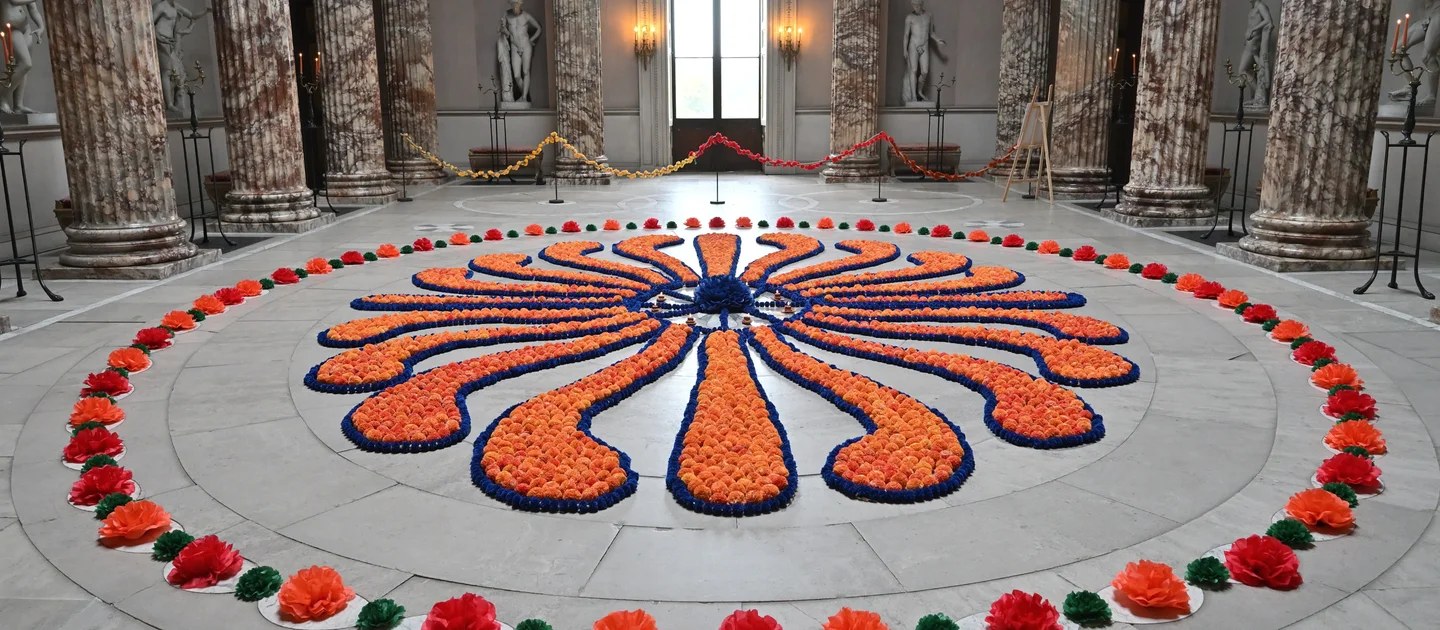
A Diwali display at Kedleston Hall is shown in the video
The National Trust (NT) has been running full-page newspaper advertisements over the weekend. They say “Nature Future” in big letters.
The smaller text says, “Nature isn’t a nice-to-have… It’s essential to our survival.” It claims that “Nature is in freefall.” The NT’s remedy is “Our Government must act to restore and protect nature, and all our futures.” The ads instruct readers to write to their MP “and make your voice heard”.
This ad campaign marks a further step in the Trust’s determination to depart from at least half of its charitable purposes. These are stated in law as “The preservation for the benefit of the nation of lands and tenements (including buildings) of beauty or historic interest”. The NT is not supposed to be a campaigning organisation.
This current promotion has nothing whatever to do with historic buildings and not much with land the Trust cares for. Under its current leadership, the NT has expressed distaste for some of its own properties and is treating many of them without scholarly care and affection. As membership numbers fall and green investments go awry, there is also less money to look after them.
Yet the Trust seems to see itself as no more than a green pressure group vying for Government attention. I doubt it will be arraigned for this departure from its historic mission. The Director of Legal Services for the Charity Commission, Jan Lasik, was previously its zealous General Counsel. That is how the famous Blob works, especially under a Labour Government.
Just as the NT advertisements appeared, I received an internal video produced by the Trust to instruct its staff and volunteers in what it calls its “new brand and values”. So it does indeed have values different from its founding ones. The film is called “Together we thrive”. It speaks of joining a “movement”, rather than a charity.
NT volunteers are the people most disparaged by the Trust because they tend not to “get with the programme” of “decolonisation” and to love the houses and gardens which they steward without payment.
The video comes with an email from an NT general manager which refers to a re-education session: “The speaker on these new values mentioned… that these are supposed to be comfortable, whilst also uncomfortable… I like that we are pushing ourselves out of our comfort zone to deliver our charitable purpose.”
The video, just over two minutes long, must indeed be uncomfortable for those who care about the NT’s original charitable purposes. It never mentions the words “houses”, “buildings”, “gardens”, “heritage”, “Britain” or “England” (though it does show a couple of signs in Welsh). Nor are there any scenes of recognisable farming, although the Trust owns 600,000 acres of mostly agricultural land. No sheep, goat or pig is shown, and no tractor or arable crop.
The film does not name any house it possesses (except for a fleeting picture of the sign for Erddig) or anything about any house’s collections, except for a shot of a suit of armour being polished. The nearest it gets is to speak of “giving new life to old places”.
NT properties do appear in the film, but only as backdrops to the messages being preached. “We make spaces where people flourish,” is the slogan. Thus Corfe Castle (unnamed) is shown, not for itself, but for crowds of happy young people sprawled beneath it looking vaguely environmental.
The interior of a Georgian house is depicted with a black performance artist sauntering through it. The floor of another such house is shown with its floor covered with candles, apparently in a Hindu style. In another interior, a giant screen is erected showing what looks like a drag queen.
The film is obsessed with turbans, especially yellow ones: I counted ten of them appearing in five different stages of the film. More generally, it unceasingly pushes a multicultural picture unrecognisable in NT properties. I could not make an inventory of every frame, because the film flashes up images with almost subliminal speed but, by my count, more than 50 images of non-white (mainly black) people appear, and slightly fewer of white people. A Rastafarian smiles at a mural of Bob Marley with “The People’s Champion” painted on it. I don’t think the building in question belongs to the National Trust.
Real-life observation suggests an average ratio visiting NT properties of more like 20 whites to one ethnic-minority visitor. Nevertheless, staff and volunteers are told in the video that when they join they are “embracing the traditions of different cultures”. The only culture excluded is that embodied in the 200-plus country houses the Trust owns.
Oldish white people, the dominant NT demographic, feature a bit in the film, but mainly to teach the lesson that “Together we stand for the people who walk these paths long after we are gone.” A black man in a red beret puts a comforting arm round the shoulder of a wrinkled old white woman.
The new generation, of course, is different, and whenever it is not “diverse” this is excused by activism. One shot shows a young white woman protestor holding up a placard outside Parliament proclaiming, “Ocean & Climate Emergency”.
Having closely studied the film, I find it striking that it so rarely discusses what is distinctive about the National Trust. The values and images it espouses are those of any green organisation. There is a clear message here: people who love the Trust’s buildings and gardens, and believe in its founding values, are not wanted on voyage.