Bijan Omrani, author of God is an Englishman, explains in the Telegraph how the Quick Vote has kept him off the National Trust’s Council

There are some elections, for places like Russia, North Korea, Belarus, where you know what the result will be before they are held. Sadly, the same is the case for the council of the National Trust.
I stood this year for election to the council, the body that chooses the governing board of trustees and is meant to scrutinise the Trust’s work. The voting results were announced on Saturday. As I knew would be the case, I was not elected.
This is less to do with my own manifold shortcomings, but with the way the election process is managed. For it is virtually impossible for anyone not favoured by the Trust to win.
The Trust encourages a wide field of candidates to apply. Thirty-five put their names forward this year. You just need to be a member, and you don’t even need a proposer or seconder.
Out of this field, the Trust picks a slate of approved candidates, whom it finds congenial. These are then given a preferential place on the ballot. When you come to vote online, you can approve their chosen candidates straight away with just one click via the “Quick Vote” system. But if you want to vote for anyone else, you have to laboriously search through the list of candidates and their statements to look for others to support.
In addition, candidates are not permitted to campaign beyond submitting a couple of short statements that they can publish in the official election booklet. What hope for them to set out their distinctive stalls and enter into open debate about the conduct and future of the Trust?
This Quick Vote system, which makes it a racing certainty that only the approved candidates will win, is not only destroying the trust of members: we can see this in the collapse of those who bothered to vote, down from 153,641 in 2023 to 56,119 in 2025 (1.5 per cent of the National Trust’s membership). It also means that the management of the Trust is less likely to hear constructively critical voices, who dissent from its ever-increasing embrace of hyper-progressive political causes.
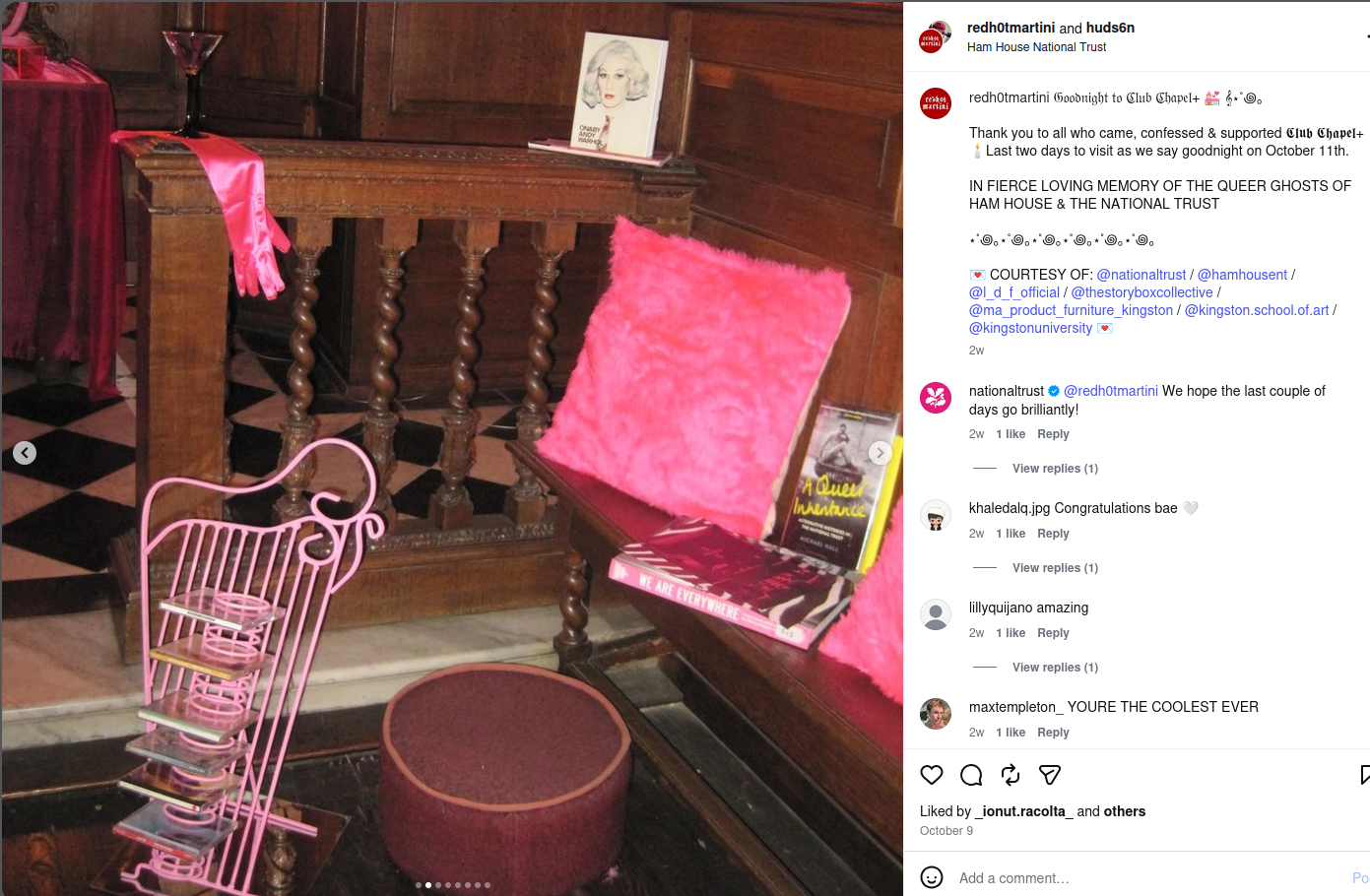
We can see the impact on the ground. Take, for example, a recent event in the Trust’s Ham House in Richmond, which has not yet received press attention. “Club Chapel” was a month-long queer “reinterpretation” of the property’s historic 17th-century chapel. The chapel was kitted out in garish pink-neon lights, cocktail glasses, faux-fur pillows, and piped with “queer club classics juxtaposed in a choral style”.
On the altar sat a sign reading: “In Fierce Loving Memory Of The Queer Ghosts Of Ham House And The National Trust.” Crosses were inscribed with the slogan: “Club Chapel.” Accompanying commentary by the designer said it asked us to consider whether it was “a plus sign [from LGBTQ+] or [a] cross”.
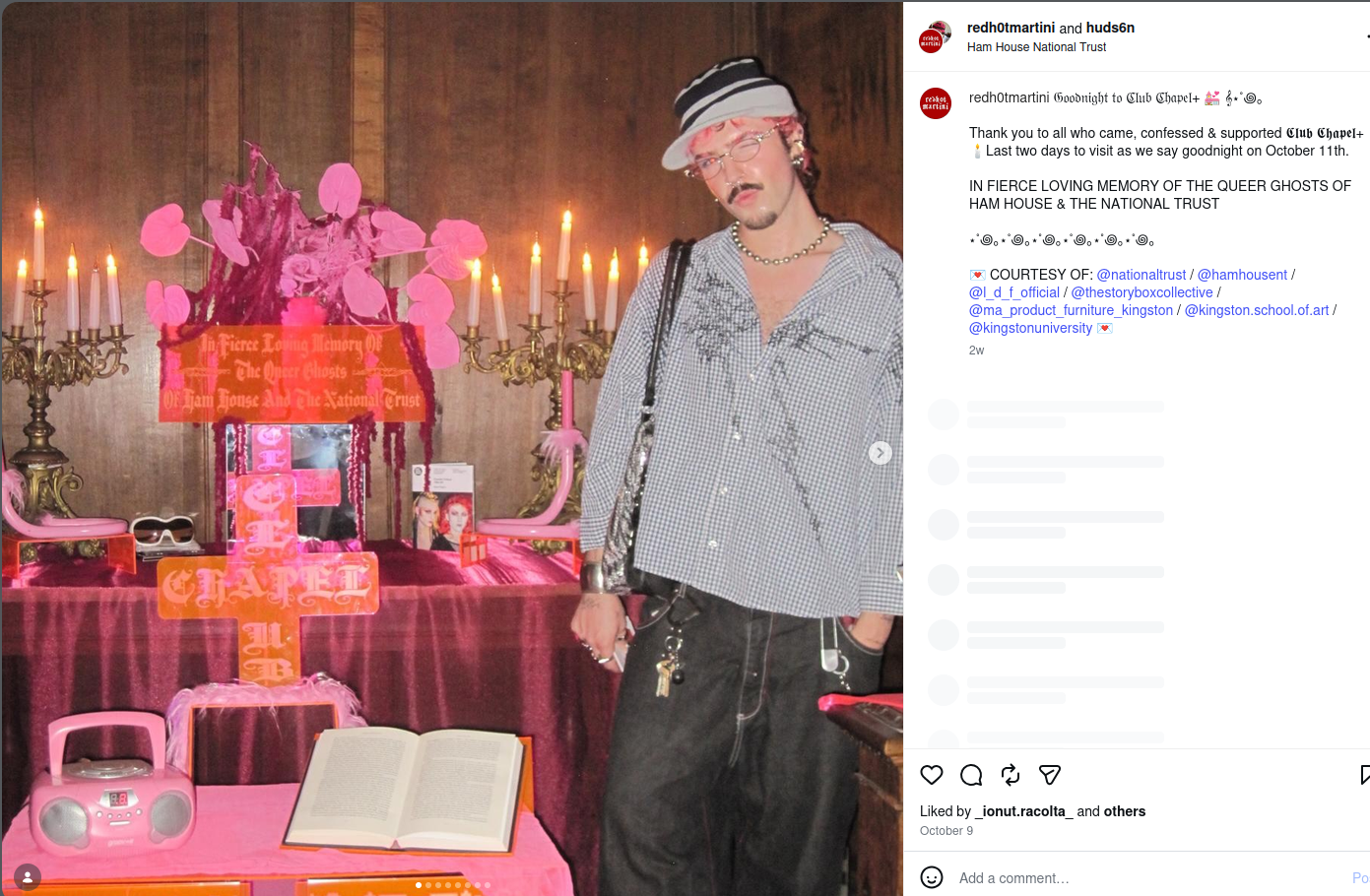
It is a consequence of the National Trust insulating itself from proper scrutiny that it thinks that it can treat a historic place of worship committed to its care in this manner, and that it is its business to portray the cross – the central symbol of the nation’s historic faith – as an emblem of sexual orientation.
This is only one instance of the Trust’s hardly neutral behaviour. Whilst it has promoted “inclusion and well-being” calendars that featured festivals from all major religions except Christianity, it banned a Christian documentary-maker from making a film about St Cuthbert in a site in Northumbria because of the film’s “religious affiliation”. It has championed “queer ecology” events and has been teaching five-year-olds about “black power salutes” at baking workshops. It also continues to put forward one-sided narratives about the country’s involvement in slavery and colonialism.
Whilst it indulges in political activism, concerns have been raised about its stewardship of some of its great houses.
The Trust’s unique powers were granted by Parliament. If the council cannot provide that desperately needed scrutiny, it is time for Parliament to do so instead.