

The National Trust drops proposal to turn Sherborne landscape into a swamp
The Times reports that the National Trust has withdrawn its planning application to transform an already neglected eighteenth-century landscape into a wetland after it was opposed by the Gardens Trust and the council’s biodiversity officer
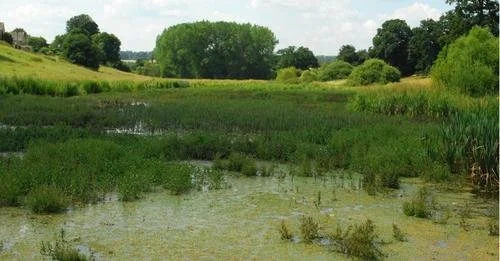
Sherborne Brook has been neglected for many years
The National Trust has withdrawn its plans to rewild some grade II listed parkland in Gloucestershire after an outcry from locals who said decades of neglect by the charity had turned their cherished lakes into a boggy swamp filled with reeds.
The trust caused outrage when it announced plans to create a wetland next to the Sherborne Broadwaters, which run through a valley near Cheltenham.
Sherborne villagers, many of whom are National Trust tenants, said the charity has failed to dredge the Georgian lakes for decades and is “destroying” a cherished national heritage landscape through “managed decline”.
The trust planned to dig large scrapes and scatter fallen tree trunks alongside the degraded ornamental lakes in an experimental effort to stop more silt reaching the waterway. It was estimated to cost £200,000.
Their planning proposal said the “character of this area will change to a more diverse landscape with areas of occasionally inundated land, resulting in wetland habitat creation”.
The plans were strongly opposed by the Gardens Trust, Gloucestershire Garden and Landscape Trust, Sherborne parish council and the district council’s senior biodiversity officer.
In the face of widespread opposition and criticism, the trust has now withdrawn its wetland plans and recently announced it is meeting with a “potential contractor for silt and aquatic vegetation removal from the Broadwaters, with the aim of starting work next summer”.
Sherborne parish council said it received an update from the National Trust, which read: “Just a short note to let you know that we have decided to withdraw the Brook planning application based on advice from the planning department.”
Moira Tremaine, whose farming family maintained the listed parkland for three generations before the National Trust took control in the 1980s, said: “The National Trust may consider reapplying for planning permission in the spring but it will take a lot of work from them to address the issues.
“Many residents feel the sensible thing to do is to drop the wetland idea, do some dredging and de-vegetating in the Broadwaters and crack on with the wetland plan downstream on the windrush, which lends itself better to such a scheme, and where we can all support them.”
A National Trust spokeswoman said they had withdrawn the planning application “following requests for further information and discussion with the planning officer”.
She added: “We hope to resubmit in 2026 and will continue to engage with external partners regarding our plans in the interim.”
Anthony O’Hear, who lives in a flat in Sherborne House, the former manor house that overlooks the lakes, said he was “appalled” at the proposed changes to the parkland.
“What is needed is to fix the foundations, not obfuscation about rewilding and the like, but a clear determination to restore the Broadwater to its original state,” he said in a letter of objection to the council.
Lord Dear, a crossbench peer and a former chief constable of West Midlands police, said the land was “suffering from serious inattention and poor maintenance” and was in a “sorry state”.
“The application by the National Trust seeks to further this decline so as to completely change the original character of the park, old vistas, old amenity,” he said.
Yvonne Blankley, 61, who chairs the parish council and runs the village shop, claimed a National Trust representative told a residents meeting that the wetland plans submitted to the district council were a “reimagining” of the landscape.
“How can a charity which is supposed to protect and preserve our history for future generations actively seek to change it for ever?” she said.
A biodiversity net gain assessment submitted by the trust claimed the proposed scheme was predicted to achieve a 22.29 per cent increase in flora and fauna.
However, Luke Etheridge, the senior biodiversity officer at the district council, recommended the council refuse the application because it is “not clear” the trust’s habitat proposals are “realistic and/or achievable” given the “potential levels of inundation, attenuation and silt deposition that are likely to occur as a result of the development”.
He said “insufficient information has been submitted to demonstrate that the biodiversity gain objective can be met”.
The Gardens Trust and Gloucestershire Garden and Landscape Trust both called for the council to refuse the plans, saying there was an “assumption in the application that the area can be considered and managed as natural wetland, whereas in reality it is the parkland of a historic designed landscape”.