Hilary McGrady told Times Radio that she does not regret telling people ‘their history as well as someone else’s history’. The Times reports,
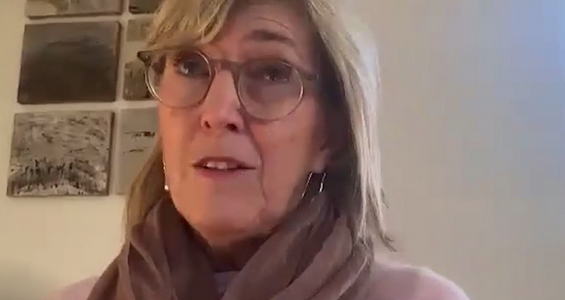
Hilary McGrady, Director-General of the National Trust, speaking to Times Radio
The head of the National Trust has said that she “regrets getting embroiled in culture wars” after years of accusations that the charity has become too “woke”.
Hilary McGrady, the trust’s director-general, said she had not “set out to try to provoke or annoy people”, six years after the publication of a controversial report on slavery.
The report detailed the links to slavery of 93 of the trust’s properties, including Winston Churchill’s family home, leading critics to argue that it was “denigrating” Britain’s history and promoting “cultural Marxism”.
“Do I regret getting embroiled in culture wars?,” McGrady, who has led the trust since 2018, told Times Radio. “Yes, I never wanted to be part of the culture wars. I didn’t set out to try to provoke or annoy people about this.
“Do I regret wanting to be an organisation that is genuinely for everyone, that people, anyone that can come to our property can see themselves at our places? Can feel as if we’re telling their history as well as someone else’s history, that they feel as though they’re being heard? No, I don’t regret that at all.”
The furore after the report’s publication in 2020 led to the creation of a splinter group, Restore Trust, made up of disgruntled National Trust members unhappy about what they saw as the spread of “modish, divisive ideologies”.
Among those supporting the breakaway group was Kemi Badenoch, the Conservative Party leader, who accused the National Trust of using “anti-white” rhetoric after it replaced the term “ethnic minority” with “global majority”.
Restore Trust’s bugbears include the trust’s decision not to rebuild Clandon House, a Palladian gem in Surrey, after it burnt to the ground in 2015 and the “dumbing-down” of Sudbury Hall, a fine Restoration house in Derbyshire, into the “Children’s Country House”.
Traditionalists have also been irked by volunteers wearing LGBT lanyards, a ban on trail hunting on charity land and the introduction of bean bags, disco balls and modern art installations at the properties.
Asked whether she sympathised with such criticisms, McGrady said: “I want to listen to their points of view. We’re not always going to agree, but the trust is genuinely trying to be here for everyone, and their views are just as important as anyone else, so it’s really difficult when you have so many people to try to please, you’re never going to please all of them all of the time.”
Founded in 1895, the National Trust is Europe’s biggest conservation charity with more than 5.3 million members, and covers England, Wales and Northern Ireland. Its 9,500 staff and thousands of volunteers look after more than 250,000 hectares of farmland, 890 miles of coastline and 500 historic properties.
McGrady, who has worked for the charity since 2006, has said that she received death threats after the slavery report and was taken aback that people were so angry about it.
“I’m from Northern Ireland so most of the time I have perspective, I think: ‘Seriously you’re getting so worked up about this stuff you think this warrants a death threat?’ It’s completely bizarre,” she said.