


History Reclaimed has looked at claims made about Francis Drake in the National Trust’s ‘Interim Report on the Connections between Colonialism and Properties now in the Care of the National Trust, Including Links with Historic Slavery’ and asks,
Sir Francis Drake sailed on three of John Hawkins’ slaving voyages as a young hired hand, then quit the trade and freed slaves on later raids. So why does the National Trust still call him a slave trader?
Here is a fuller story than the one told by the National Trust:
Between 1564 and 1567, Drake went on three slave trading voyages organized by John Hawkins, his second cousin. On each of these he was an employed hand rather than an investor, so made only wages. On the first, with Hawkins, he was merely a purser and was sent back to England from the west coast of Africa with the profits made trading there, and he did not cross the Atlantic
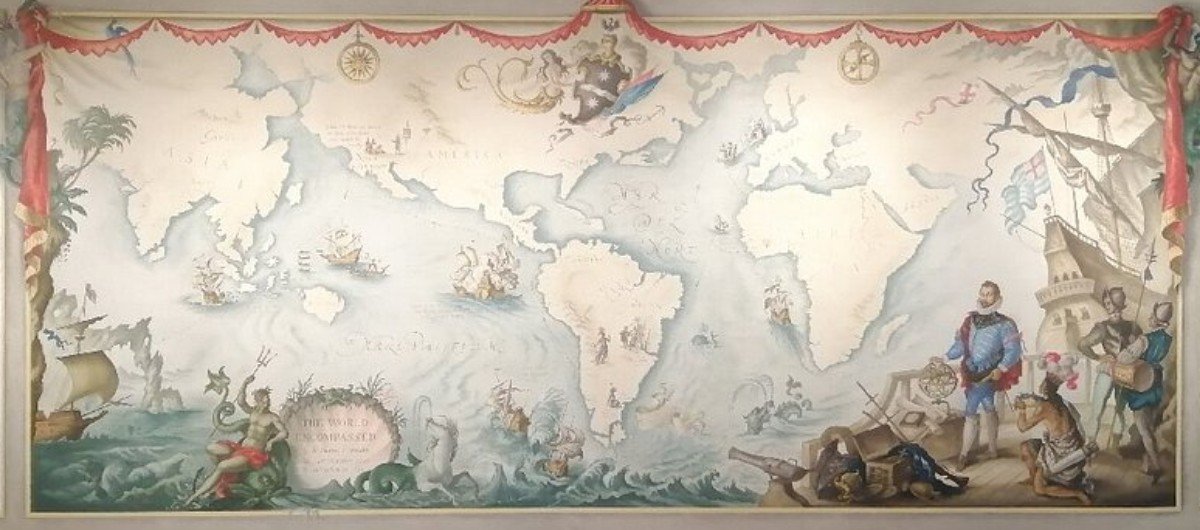
On the two subsequent voyages he did cross the Atlantic with slaves. His second voyage in 1566 was with John Lovell, a captain in Hawkins’ employ. The voyage was something of a financial failure as the Spanish, on the orders of their king, Phillip II, would not trade with the English and some of the slaves were released (on the wrong continent, of course – the fate of the rest is unclear). The third and last voyage, with Hawkins in 1567, did sell slaves into the Caribbean but ended in disaster with the destruction by the Spanish of all but two of the fleet’s ships. After that, Drake took no further part in slave trading voyages.
Drake’s personal role in the capture and selling of slaves on these voyages is unknown. He was a young man presumably out for adventure and to gain experience. He can have had no influence on the purpose, nor the conduct of the voyages. He did, however, learn what slave trading entailed and, crucially, he took no further part in it. Indeed, he is known to have freed slaves on his later voyages to the Caribbean. He joined forces with escaped slaves in his attacks on the Spanish. He employed ex-slaves on his ships on equal terms with English sailors. He befriended one, Diego, in 1572 after his assault on the Spanish town of Nombre de Dios in present-day Panama. Diego served as a guide and interpreter, came to England, and accompanied Drake on his circumnavigation voyage between 1577-79, dying en route in the Moluccas, Indonesia.