Holiday cottages closed
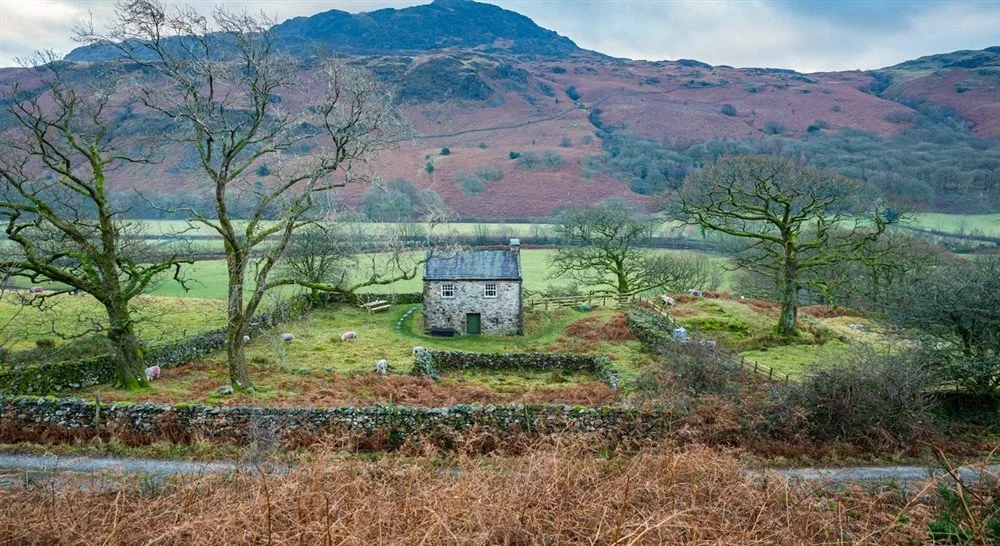
Bird How cottage in the Lake District has no mobile or internet coverage
The Financial Times writes, ‘These cottages have charmed generations — so why is the National Trust closing them?’
Without warning, Britain’s heritage charity has axed many of its most remote, most unique holiday homes
Bird How is small, remote and very basic, but a legendary holiday destination.
‘From the stone seat beside its front door, you can watch rabbits in the fields below and sheep on the fells above. You can look across to the ruins of a Roman fort and watch ephemeral waterfalls that burst from the mountainside after a storm, only to wane and vanish beneath the bracken as the sun returns. The cottage has no bathroom — to shower, you step outside, then reach up to the old iron gutter to hang a bag of water with a small hose attached. Yet since 1957, when it was acquired by the National Trust to be converted into a holiday rental, it has enchanted generations of visitors. “We loved it here,” wrote the novelist Ian McEwan in the visitor book in 2021. “Bird How is beautifully, sensually placed in the landscape.” So charmed was he that he returned the following summer and went on to include it in one of his novels. Meanwhile, as a yearning for silence and seclusion has grown more widespread, Bird How (which boasts neither TV, landline nor mobile reception) has become something of a pin-up — appearing in countless magazines and weekend supplements (the FT’s included). “It’s just perfect,” says Sue Lane, a teacher from Cheshire, who has stayed there twice a year for the past seven years. “It’s hard to put your finger on what it is, but there’s something magical about it.”’
The National Trust has now withdrawn 137 of its cottages, a quarter of the total, with no warning, consultation or announcement.
‘It has so far refused to release a list of those affected, but it includes many of the smaller and more remote houses. Among them is Longstone Cottage, an off-grid, former gamekeeper’s home overlooking the sea on the Isle of Wight. Then there is Thrang, a farm cottage in Cumbria’s sparsely populated Duddon Valley, backed by woods and accessed via a wooden bridge across a stream. Others include Foel Gopyn, a small stone house powered by solar panels and a generator, alone on a rugged hillside in Snowdonia, and 524 Pamphill Green, a cosy thatched cottage on the edge of the Kingston Lacy estate in Dorset. The move, and the lack of warning, have prompted dismay and anger. “I’m not surprised people are upset,” says Cornelia van der Poll of Restore Trust, a pressure group for disaffected members. “It happens over and over that the National Trust changes some long-term arrangement without asking people or even telling people.”’
Andy Beer, the National Trust’s chief operating officer, told the FT,
“We’re responding to some pretty pressing cost pressures . . . We’re the same as any other organisation dealing with that crunch of inflation, rising energy costs, rising wages, rising building costs.” The Trust’s last accounts show its cottages and campsites making an annual profit of £3.8mn, but Beer says that doesn’t take maintenance into account. “It’s only when we took a step back and put the costs together that we realised specific cottages were operating well below profitability.”
In response to this article, a reader has written to the Financial Times:
We had a two-week booking cancelled at Thrang in the lovely Duddon Valley, and we’re still sad about the sudden closure of High Hallgarth two years ago, another fine, remote Lakes property that we visited twice yearly for 13 years. We thought we could holiday for life in these beautiful places, but our four favourites have now had the chop.
We know we’re not alone in having made so many repeat visits, and this makes the situation more perplexing.
Visitors tend to be loyal Trust supporters, and we at least feel we were helping to preserve the beautiful vernacular buildings, often gifted to the Trust for safekeeping. If this is not one of the Trust’s main functions, what is?