

First the National Trust and now the National Portrait Gallery blame Churchill for the Bengal Famine - out of ignorance
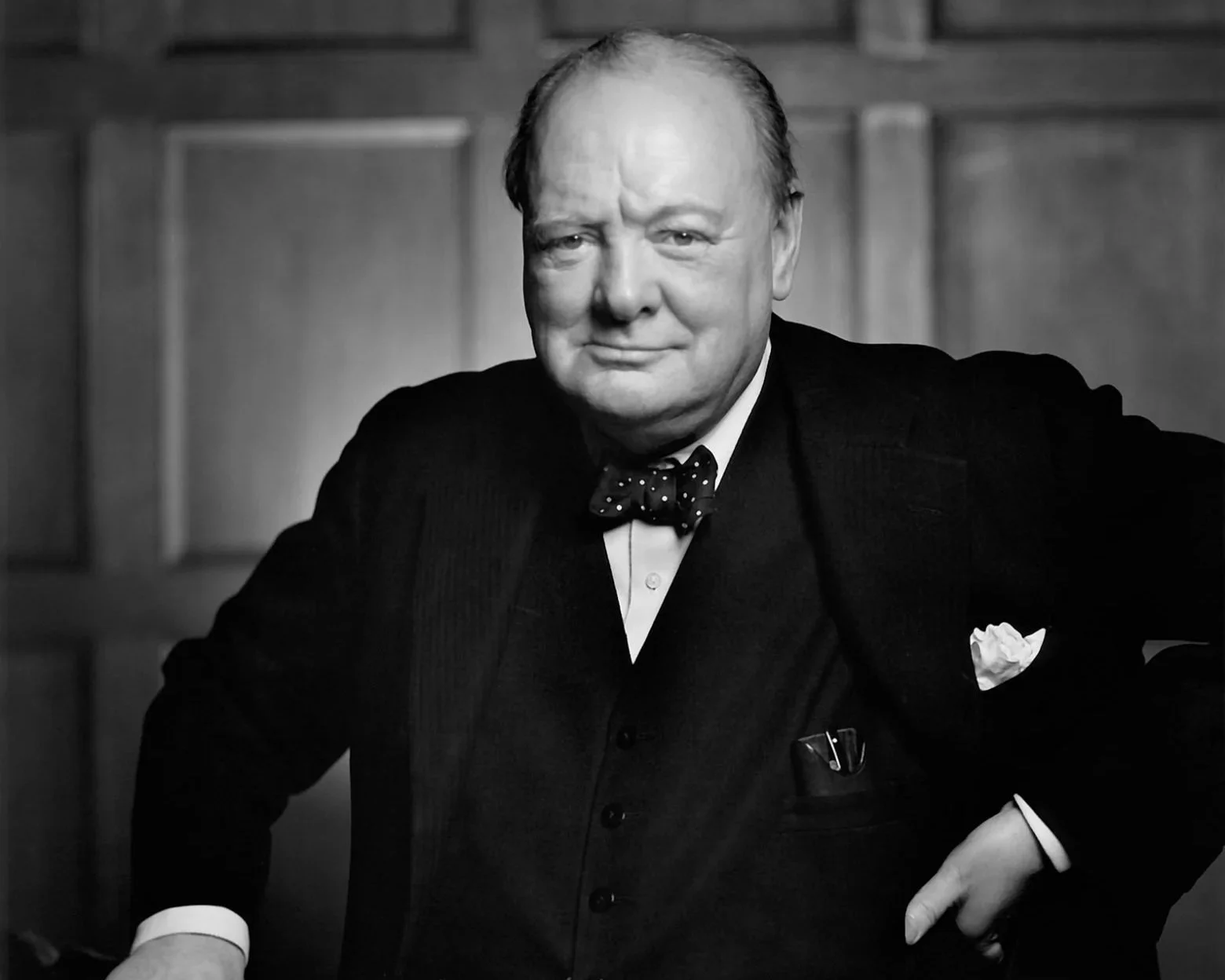
In the 2020 report on slavery and colonialism the National Trust’s curators state that Churchill was in office during the Bengal Famine of 1943, but omit to mention the part he played in resisting Nazi Germany. The Bengal Famine is presented as something that just happened to coincide with a global war waged against genocidal totalitarian empires when Britain was fighting for her survival. The entry for Chartwell begins as follows:
‘Chartwell was the family home of Sir Winston Churchill (1874–1965) from 1922 until his death. One of the longest-serving political figures in British history, he was Prime Minister twice (1940–5 and 1951–5), famously during the Second World War – a period that coincided with the Bengal Famine of 1943.’
More recently, a controversial video installation appeared in the National Portrait Gallery blaming Churchill for the famine. Prof. Lawrence Goldman demonstrates the inaccuracy of this claim and argues that the Japanese carry most of the blame in a complicated wartime situation. He explains in the Telegraph:
The claim made by the Turner Prize-shortlisted artist Helen Cammock in a video installation at the National Portrait Gallery that Winston Churchill ‘wilfully’ inflicted mass starvation on Indians during the Second World War cannot go unanswered. It is the very reverse of the truth.
The Bengal Famine in 1943 and 1944 is estimated to have killed more than two million people in India. The tragedy has been used many times to criticise the British and especially Churchill himself.
Irrationally, the wartime prime minister has been blamed personally for events that no one could control. Everyone knows that he was no stranger to controversy, but the accusations made about his role in the Bengal famine are confected anti-colonial rage without any solid basis in fact, designed to undermine the leading figure in modern British history.
The truth is that Churchill was consistently sympathetic to the suffering Bengalis. When the full extent of the crisis became clear, he immediately ordered the transport of more than 100,000 tons of grain to Bengal.
As he wrote to the new Viceroy of India, Field-Marshal Wavell, in October 1943: ‘Every effort must be made, even by the diversion of shipping urgently needed for war purposes, to deal with local shortages.’
The real villains of the story were the Japanese, with their invasion of Burma in December 1941 cutting off India from a major source of rice, thus forcing refugees into Bengal.
The concentration of military personnel in and around Calcutta, then the capital of Bengal, to repel the Japanese further strained resources there. Restricted supply led to hoarding, profiteering and price inflation.
When the Japanese bombed Calcutta in December 1942, the exodus from the city made food distribution even more difficult.
But critics of Churchill rarely like to focus on any of that, or what the great man did do to alleviate suffering.
A prominent example of the rage against him is the 2010 book Churchill’s Secret War: The British Empire and the Ravaging of India During World War II, by the Bengali-American journalist Madhusree Mukerjee.
Its central claim is that Churchill’s racism and opposition to Indian independence led him to block and divert shipments of grain from Australia to Bengal which were instead sent to Britain and Europe. Much of the supporting evidence relies on Churchill’s sometimes-insulting language about Indians – and Bengalis in particular – used in private letters and conversations.
Churchill’s well-known disrespect for some Indians, especially those seeking to leave the Empire, had no bearing on the circumstances in Bengal. Nor did it prevent his government from acting decisively.
Mukerjee’s unsubstantiated accusations were subsequently criticised by Amartya Sen, the Indian economist, Nobel laureate, and former master of Trinity College, Cambridge. The pre-eminent Indian economic historian Prof Tirthankar Roy of the London School of Economics pushed back too.
As always with historical controversies, the picture is complicated. The famine in Bengal was no different. As well as the conditions imposed by Japanese aggression, Indian provincial governments, given autonomy under the 1935 Government of India Act, were not up to the challenge of the famine.
They introduced price controls that deterred farmers from marketing their crops. Their restrictions on the movement of food prevented rice from reaching Bengal. Wavell’s predecessor as viceroy, Lord Linlithgow, who should have intervened and taken control, was too respectful of their new autonomy.
Then, in late 1942, natural disaster added to the crisis: the winter rice crop was attacked by brown-spot fungal disease, and the harvest was disrupted by cyclones and floods. Though historians differ over the extent of the shortfall, it may have been as much as a third of the expected yield.
Japanese submarines in the Bay of Bengal made supplying the province by sea almost impossible. Some 230 British and allied ships – close to 900,000 tons’ worth – were sunk there by the Japanese between January 1942 and May 1943.
But, in February 1944 Churchill convened the War Cabinet to consider again how to get more food to the province and he subsequently wrote to Wavell: ‘I will certainly help you all I can, but you must not ask the impossible.’
This was at a time when Allied plans were focused on preparations for D-Day and all shipping was being readied for the invasion of France.
Cabinet minutes two months later (April 24, 1944) showed that Churchill was still trying to relieve Bengal. His ‘sympathy was great for the sufferings of the people of India’ but, referring to the Normandy landings, he feared “the cost of incurring grave difficulties in other directions”.
We must not forget the context here: this was a civilisational battle against the greatest evil the world had known. Every day, Churchill was having to make impossible choices.
Yet still, despite the overwhelming priority of defeating the Nazis, Churchill still had the famine in Bengal in mind. He made a personal approach later to President Roosevelt for American ships to transport grain to Bengal from Australia.
But he received a predictable answer: that because of the demands of the Pacific War and preparations of D-Day, the Americans had no spare capacity.
Yet, by the end of 1944, Wavell, with the backing of the prime minister, had successfully delivered sufficient food to Bengal. That fact, and Churchill’s commitment to feeding the province evident in these letters and minutes, contradict all those who blame him for the famine.
It’s true that the British government undoubtedly prioritised the needs of the military over those of civilians in every theatre of conflict: Hitler and his Axis allies had to be defeated. Had they not been, India might have been overwhelmed militarily by a Japanese invasion. The brutality of the Japanese occupation of parts of China after 1933 would then have been experienced by Indians as well.
Helen Cammock then should acquaint herself with the complex history of the Bengal famine and the extreme difficulties faced by Churchill and the British government in India in dealing with it.
If she still wants to attribute blame, it attaches not to Churchill but to the Japanese government and high command. Those who launch wars of aggression should be held responsible for the humanitarian consequences. It is highly likely that if there’d been no war there would have been no crisis: local shortages could have been dealt with.
Faced with so many military and civilian demands across the globe, Churchill and his government did what they could and eventually fed Bengal. It was a remarkable achievement. Churchill has no case to answer.